POWER UNIT

For battery storage and charging infrastructure projects

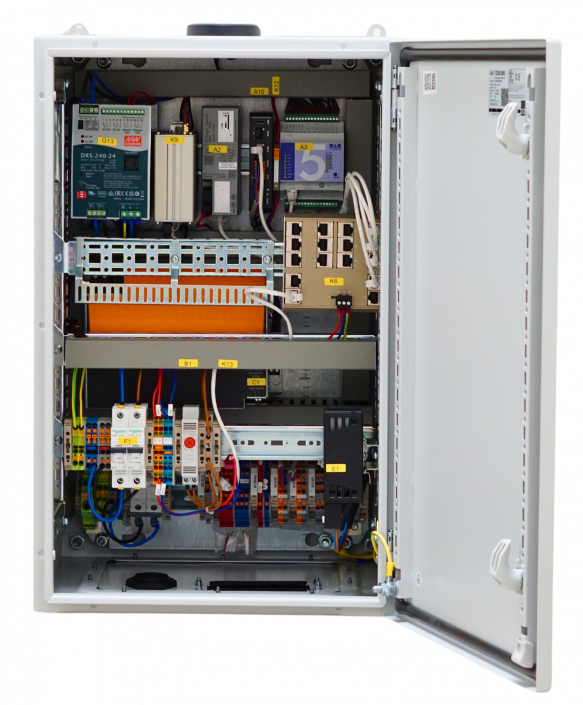
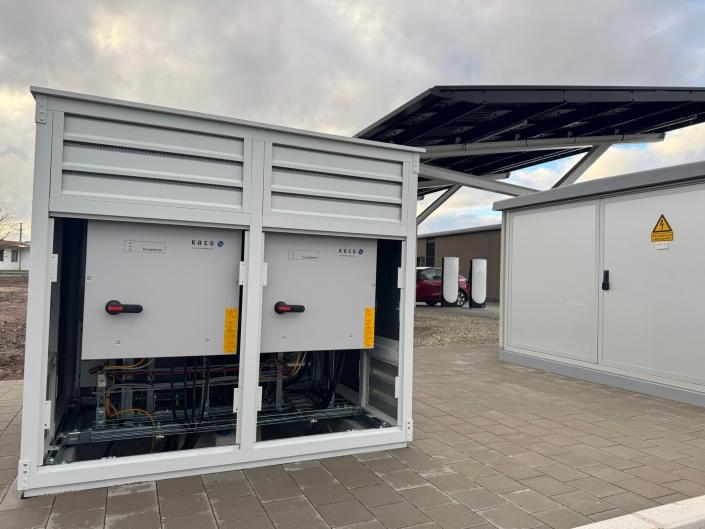
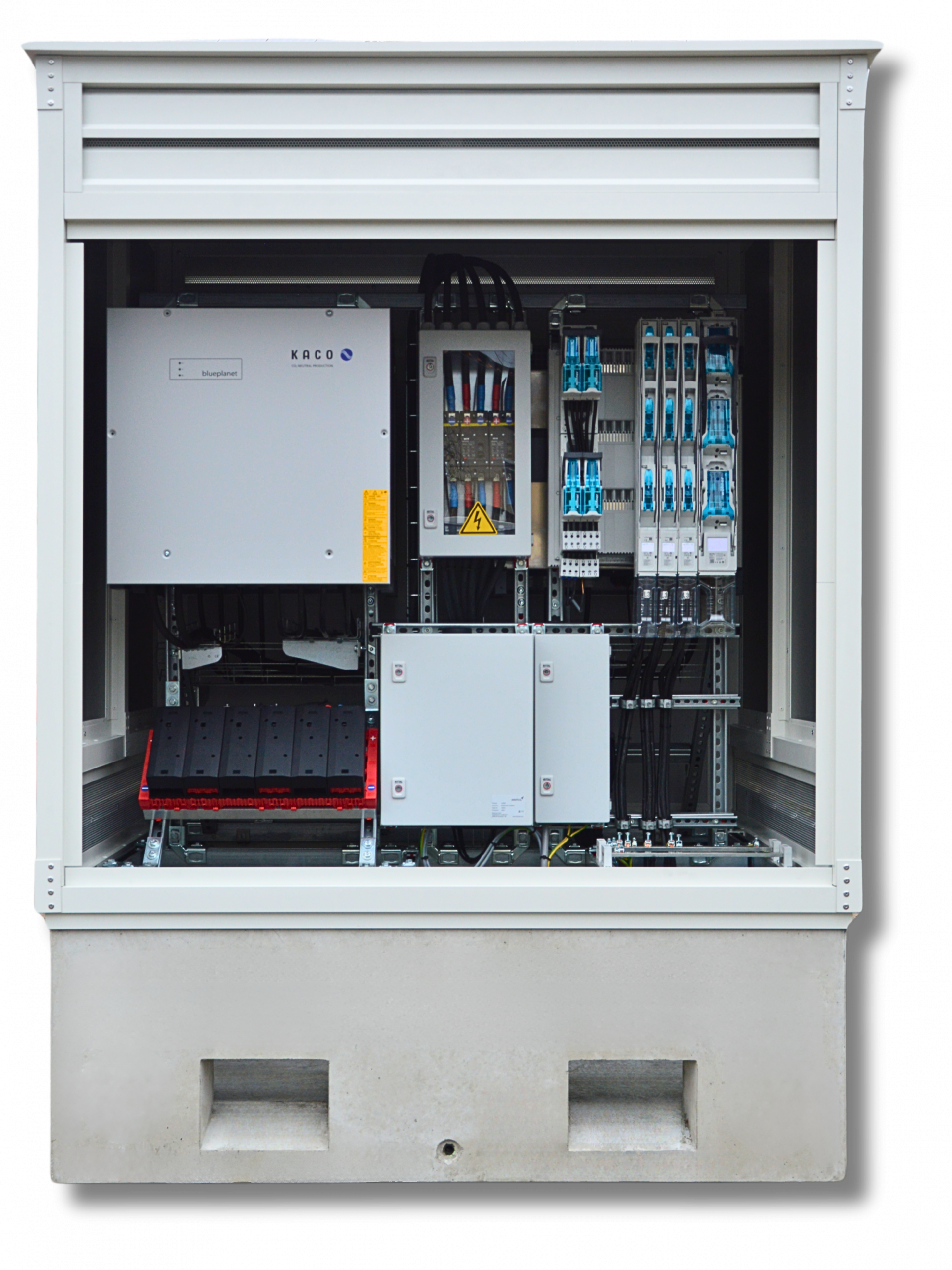
The Multiplex Power Unit is a ready-to-connect system solution that intelligently combines energy generation, storage and consumption. All central components are integrated in a modular, preconfigured unit.

Energy projects are becoming increasingly complex

Photovoltaics, battery storage, charging infrastructure and increasing grid requirements are becoming more and more interlinked. Individual components can function on their own. However, without an overarching system, inefficiencies, additional coordination effort and increased operating risks arise. This is precisely where the Multiplex Power Unit comes in.

An integrated solution instead of many individual parts.

Inverters, energy management, communication and protection technology are combined in a clearly structured unit. The unit thus forms the technical basis for a stable, scalable and reliable energy system. The focus is not on the technology itself, but on the result: a functioning overall system that can be easily integrated, reliably operated and flexibly expanded.
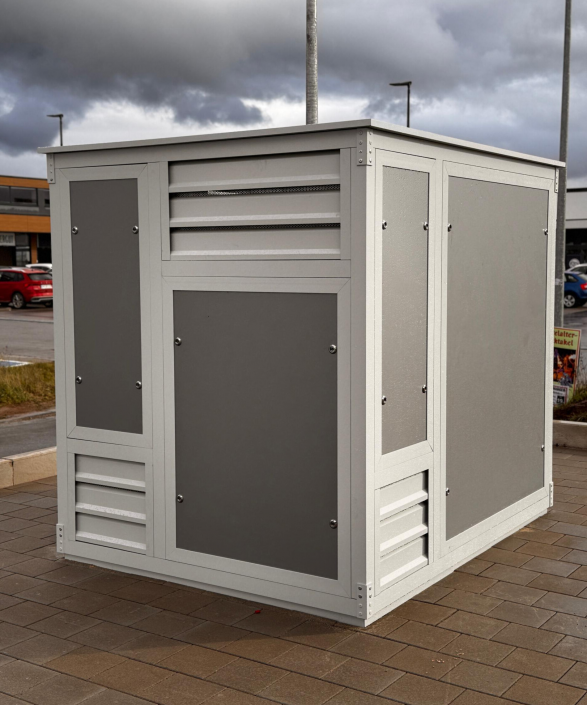
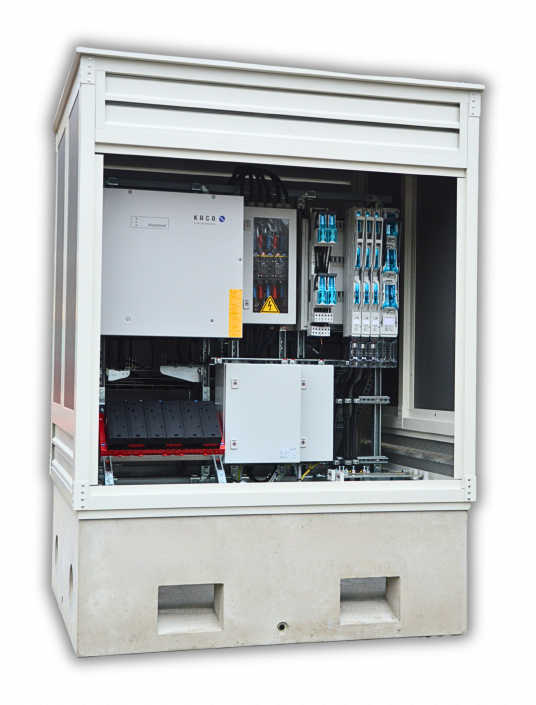
The Multiplex Power Unit is a modular, configurable system for versatile energy projects

General functions at a glance:

  • Modular and ready-to-connect power unit
  • Combination of electrical engineering and energy management (EMS)
  • Integrated inverter (from 2 to max. 6 units possible)
  • Energy management with versatile use cases and external connections
  • Integrated communication and protection technology
  • On a prefabricated concrete foundation for outdoor installation in the ground
  • Efficient monitoring with intuitive user interfaces
  • Optimized solution for efficient installation and commissioning
  • IoT connection, remote maintenance, AI-supported optimization and trading connection

Our partners

MultipleX Use Cases

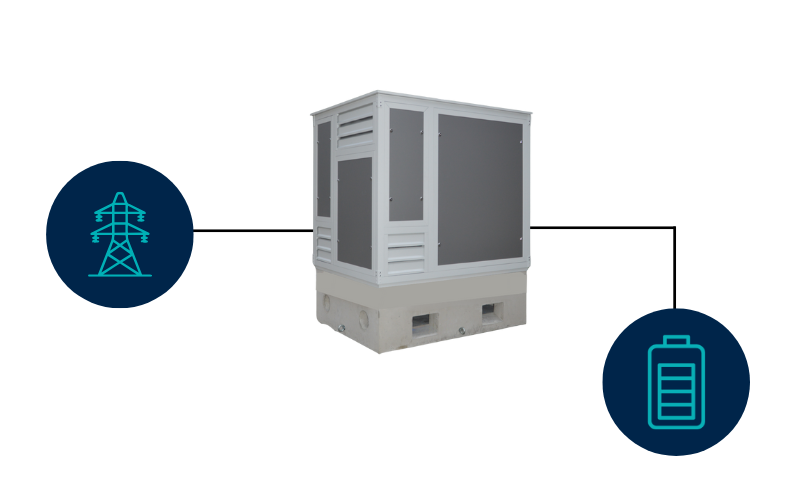
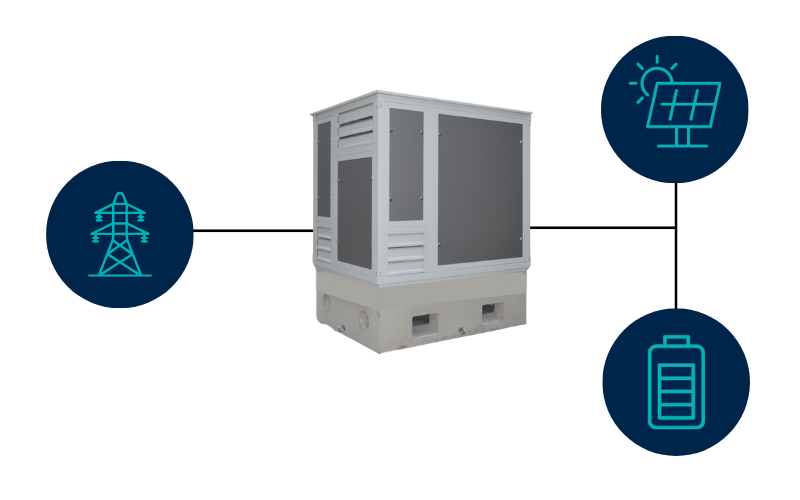
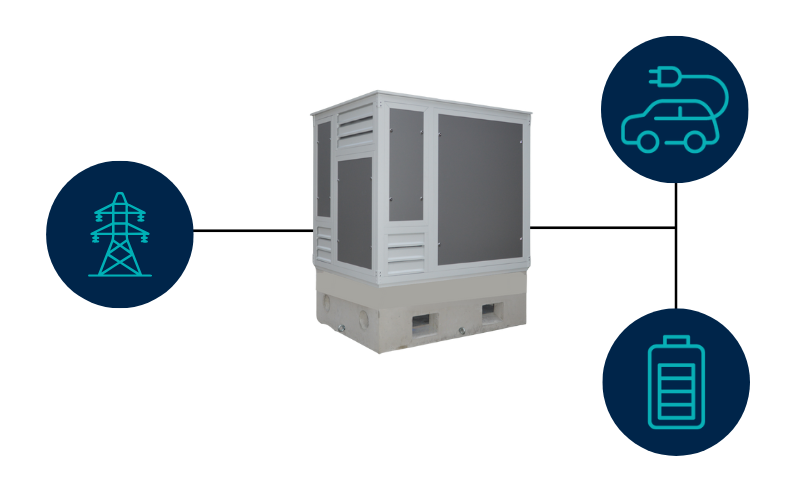
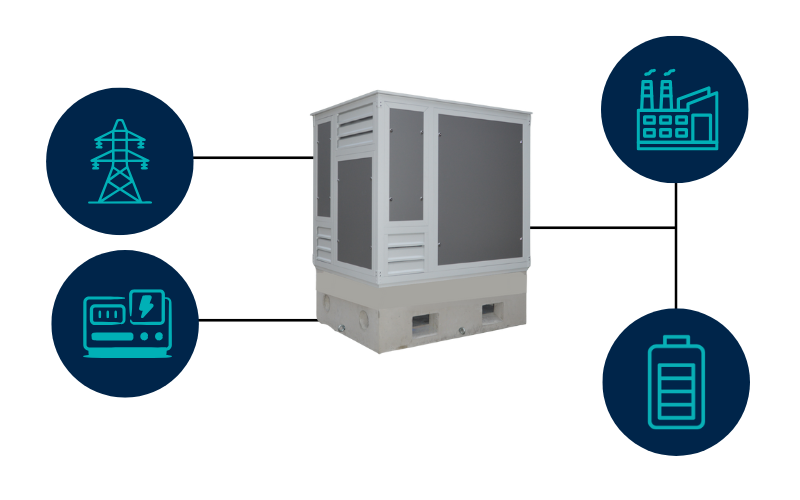
The MultipleX Power Unit has a modular design and can be flexibly adapted to different project requirements.
Depending on the area of application, it combines battery storage, generation, consumers and infrastructure into a stable overall system.

Multiplex – Battery Standalone
Multiplex – Battery Hybrid
Multiplex – Battery Mobility
Multiplex – Battery Microgrid
Advantages at a glance

A powerful, scalable and ready-to-use energy management system that combines grid-supporting functions with high technical flexibility and is optimally designed for demanding applications such as modern battery storage projects or charging hubs.
Intelligent battery storage control

LOCAL USE CASES

  • Peak shaving at the grid connection point
  • Self-consumption optimization
  • Multi-use operation with SOC sharing
    (fixed or dynamic)

Local battery optimization – BTM (optional)

  • Photovoltaic surplus charging with feed-in limitation at the grid connection point with weather forecast
  • Photovoltaic surplus loading with negative electricity prices (day-ahead market prices)
  • Optimization of procurement costs
  • Multi-use with SOC sharing according to timetable
  • Multi-use with dynamic SOC sharing according to forecasts

Battery optimization trading – FTM (coming soon)

  • Energy Trading Day-Ahead & Intraday Auction
  • Grid Services (FCR, aFCR)

Integrated energy management

The Multiplex Power Unit is supplied with an integrated energy management system (EMS) that is optimally adapted to individual applications.

  • Ready-to-connect EMS compact control cabinet integrated (various power units)
  • Integrated, preconfigured and tested at the factory
  • Central control for energy flows, generation, storage and consumers
  • Compact system solution with power supply, communication and connection of external systems
  • Designed for safe, efficient and sustainable operation

Functions of the energy management portal

  • Local Live View with all relevant real-time values
  • System overview and performance dashboard
  • Data analysis
  • Setting settings and parameters
  • Status and alarm overview
  • Remote maintenance via VPN
  • Multi-Users
  • Multi-Language

IoT platform

In the EMS system architecture, the IoT platform performs essential tasks for accessing and managing the local EMS controllers and provides the visualization for the end customer via a modern dashboard architecture.

  • Management of local EMS controllers with intuitive dashboard
  • User-friendly visualization for the end customer
  • Remote access for commissioning and support
  • “Over The Air” (OTA) updates for all EMS controllers
  • Kubernetes-based open source architecture for individual customization
  • Rest API for external data usage
  • Meets IEC 62443 and NIST Cyper Security Framework 1.0. requirements
  • Flexible tariff models according to data volume and time resolution possible

Battery storage – stages of optimization

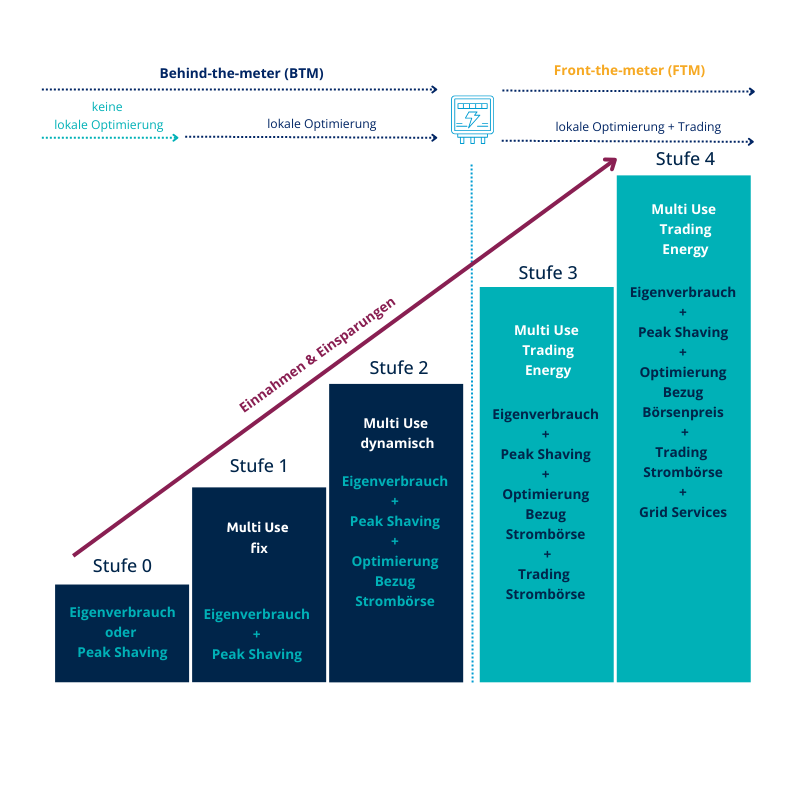
The EMS platform offers comprehensive optimization options and maximizes revenue and savings for the customer in several stages.

Level 0: No optimization – the memory only supports a defined use case.

Stage 1: A fixed schedule distributes the battery capacity between two use cases, e.g. peak shaving in winter and self-consumption optimization in summer.

Stage 2: AI-based forecasts dynamically optimize the storage system based on load profile, generation and day-ahead market prices – ideal for customers with dynamic electricity tariffs.

Level 3 & 4: The available capacity is determined for the following day and can be used for energy trading or grid services via a virtual power plant. The EMS platform takes over the dynamic optimization.

A graphic shows an example of peak shaving combined with balancing power marketing.

AI Trading

The EMS platform offers various options for integrating the battery storage system into the trading front-of-the-meter (FTM). A distinction is made between flexibility marketing (day-ahead and intraday market) and grid services (FCR, aFCR).

Direct connection to trading:

With the energy management system used, battery storage systems above a certain size can be connected directly to a virtual power plant (VPP) for marketing. This generally makes sense from a battery storage capacity of at least 1 MW. In practice, this direct connection is primarily used for standalone battery storage projects and, in future, also for battery storage projects as part of “co-location” (e.g. PV+battery hybrid).

Trading connection via a “virtual subpool”:

The EMS platform enables the customer to participate in trading via a virtual subpool. Here, a large number of battery storage systems are bundled technologically and administratively and made available for marketing. This option is particularly suitable for customers for whom a direct connection is not practical. It also offers the possibility for battery storage systems that would like to participate in flexibility marketing in addition to a local use case – this is the only practicable solution, particularly in conjunction with dynamic optimization.

The following diagram shows an example of a peak shaving use case in combination with balancing power marketing (grid services).

Would you like to find out more about our product and the potential of your battery storage project?

In just a few clicks, we analyze your potential and the implementation options. You will immediately receive a customized offer from us.

Or call us directly:
+49 (0) 8677 918680
©2024 - 2025 Copyright - Connectika